
BLOG
Where international law and innovation meet: building technologies that are Lawful by Design

Article 36 Canaries in the Military AI Coal Mine
The pace of military AI acquisition is exposing a critical pressure point in national legal review systems.
Traditional Article 36 processes, designed for slower, centralised weapon acquisition are now being tested by rapid, decentralised development of AI-enabled capabilities.
In our latest Article 36 Legal blog, 'Article 36 Legal Review Canaries in the Military AI Coal Mine', we explore:
• Why legal review frameworks are struggling to keep pace
• The emerging role of legal advisors as “canaries in the military AI coal mine”
• The shift toward distributed, lifecycle-based legal assurance
• Why industry must adopt a Lawful by Design approach

Speed, Power and Restraint: Why Article 36 Legal Reviews Matter More Than Ever
As States rearm at unprecedented speed, driven by geopolitical instability, rising defence expenditure and the rapid adoption of AI-enabled and autonomous military systems, international law is increasingly portrayed as a constraint rather than a safeguard.
This blog argues that the opposite is true. Drawing on recent global events, including the war in Ukraine, it shows why national Article 36 legal review obligations are more essential now than at any point in the past century. Far from being a peacetime luxury or bureaucratic impediment, legal review is a strategic enabler that protects States and industry from long-term legal, political and operational risk.
The blog demonstrates how embedding legal review early in the design, development and acquisition of new military capabilities strengthens compliance with international humanitarian law while supporting speed, agility and responsible innovation in an increasingly contested security environment.

A case for a responsible approach to the review of AI-DSS and other AI-enabled systems
This blog argues for a Responsible Review of AI-DSS and AWS: a broader, multidisciplinary review process that operates alongside Article 36 legal review and addresses the full risk profile of military AI.

Operationalising the GC REAIM ‘Responsible by Design’ Report
The Global Commission on Responsible Artificial Intelligence in the Military Domain (GC REAIM) has released its landmark report Responsible by Design, outlining global principles for the ethical, legal, and operational governance of military AI. This blog explores how Article 36 Legal’s Lawful by Design (LBD) initiative already operationalises many of principles and core recommendations.

Are you Playing TRL Snakes and Ladders?
Neglecting legal compliance, particularly under international humanitarian law (IHL), during the early stages can transform this structured progression into a perilous game of "snakes and ladders." We explore how you can avoid costly delays by considering IHL in the design and development on new military technologies.
Image source: Yellow Mountain Imports, Inc.
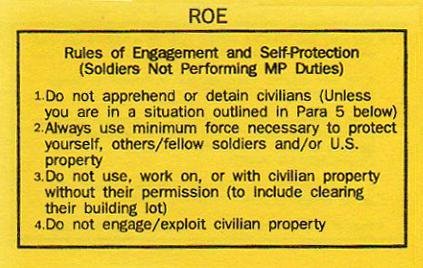
Should AWS be designed to comply with ROE?
If an AWS enables or performs a function associated with the use of force may be deployed on a national or multinational mission regulated by ROE . This blog considers what how the design and development of AI enabled and autonomous weapons, including AI decision support systems, will need to incorporate ROE rules and restrictions in its operating system.

Is the US GBU-57 MOP a lawful weapon? An Article 36 analysis.
While the Israel's 'Operation Rising Lion' against the Iran's uranium enrichment capability enters its second week, the world awaits the US President's decision to enter the conflict and use its bunker-busting GBU-57 Massive Ordinance Penetrator (MOP) to attack. This post considers the legality of the GBU-57 itself.
Image: Google Earth Illustration/ Janey Loehrke/ USA Today

Are AI-DSS a ‘means or method of warfare’ requiring legal review?
The use of AI Decision Support Systems (DSS) in military targeting raises complex legal, ethical and operational challenges. This blog considers whether States may interpret AI DSS as ‘means or method of warfare’ triggering their Article 36 legal review obligation.

Assessing the Legality of Ukraine’s ‘Operation Spiderweb’ Drones Under Article 36 of Additional Protocol I
On 1 June 2025, Ukraine executed a bold and unprecedented military operation, codenamed "Operation Spiderweb," targeting Russian strategic bombers deep within Russian territory. Utilising over 100 one-way attack drones, Ukraine struck multiple airbases across five Russian regions, reportedly damaging or destroying approximately 41 aircraft.
This blog considers the Article 36 legal review of Ukraine’s drones used during Operation Spiderweb.

Will the world ban autonomous weapon systems?
On 12–13 May 2025, the United Nations General Assembly (UNGA) convened member states in New York to address the ethical, legal, and humanitarian concerns associated with autonomous weapon systems (AWS). This high-level meeting reflects growing international momentum, but have the key preconditions for a new treaty on AWS been met?
Our latest blog analyses the prospects for new international law banning or regulating AWS.